

I am not entirely sure why I waited so long to write a review for The Only Good Indians; roughly several months after reading it. Stephen Graham Jones has conjured quite an engaging, haunting, and wonderfully written narrative with an authorial voice that is authentic to his identity as a Native American (part of the Blackfoot tribe). The Only Good Indians is a multi-layered narrative that weaves together a tale of psychological horror with vengeance, the supernatural, and Jones’s ability to creating a terrifying atmosphere. Yet where The Only Good Indians really shines is its’ exploration of contemporary Indian life through the many difficulties, as well as the forgotten cultural beauty, in the midst of tumultuous circumstances. It’s subtle, but treads carefully throughout the text, adding to the collective elements that brew an incredibly well written horror novel that won’t only incite fear, but inspire thought on the social commentary it examines.
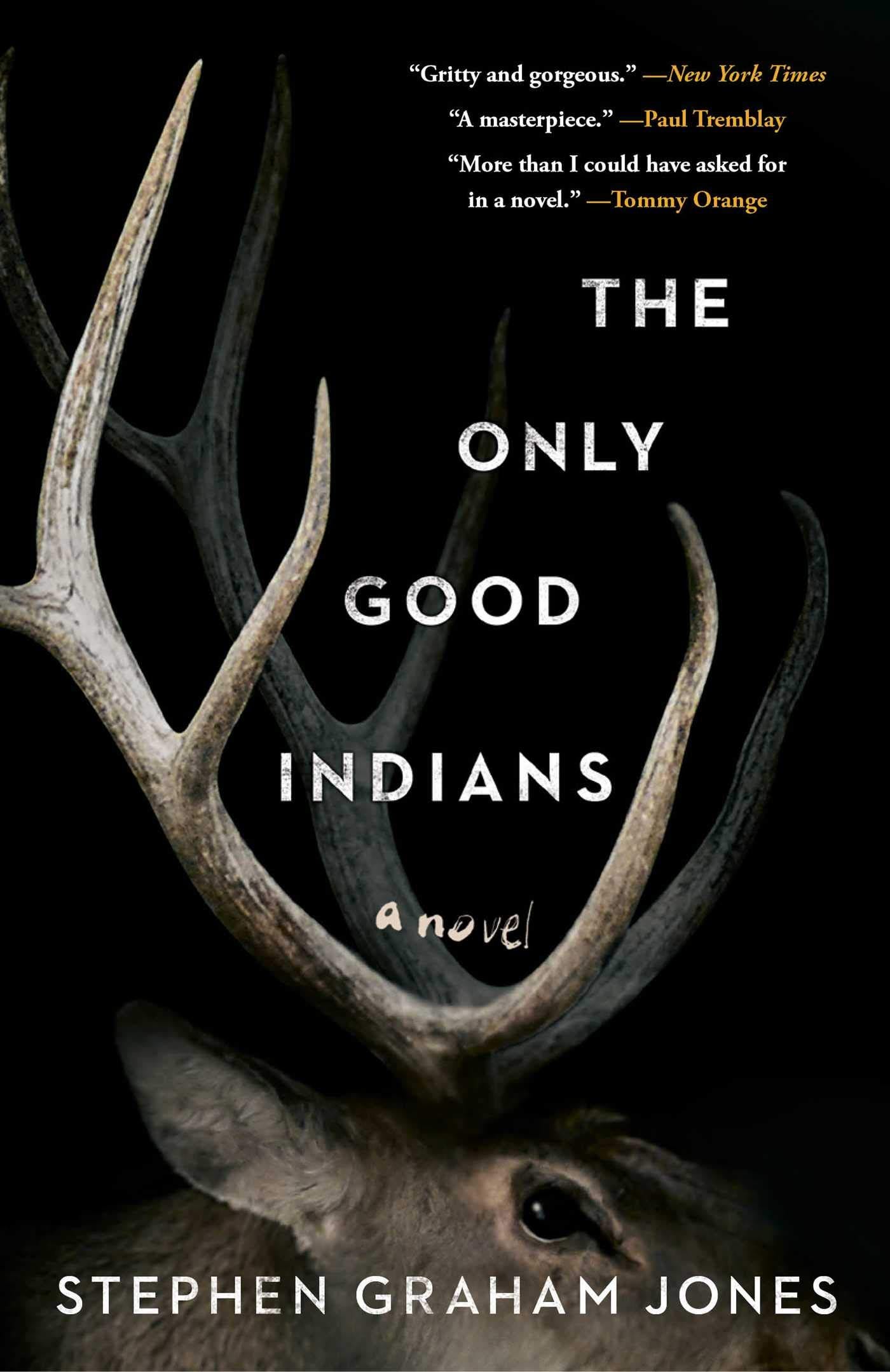
The Only Good Indians tells the story of four Blackfoot Native Americans, Lewis, Ricky, Gabe, and Cassidy located on a reservation in northern Montana. One night, as the four young men venture on a hunt, treading illegal territory that’s meant for the Native elders, they come across a group of elk at the foot of a hill. Reigning bullets onto the elk below, the four men annihilate the herd without blinking an eye. In the midst of the massacre they’ve created, they come to find that one of the elk was pregnant, with her calf still alive. Ten years later, the massacre that ensued haunts them to their core. Lewis, the one who killed the pregnant elk, becomes enslaved to hallucinations of a woman donning the head of an elk. He begins to fear for the sake of his sanity, and even contemplates some vengeful entity come to seek justice. Yet when Lewis’s dog is suddenly killed by trampling, it becomes clear his visions may be more than just his mind, but something sinister encroaching into his reality.
As the novel progresses, Jones examines the departure from Native American culture within each character. This exploration makes obvious the collision between old traditions and modern Indian life, from interracial marriage (Lewis marries a White woman named Peta), acclimation to life outside the reservation, as well as buried traditions that are vaguely remembered. Bearing some weight on the outcome of their circumstances, the four men put their “archaic” beliefs to rest; how could there possibly be a vengeful entity seeking them out in pursuit of justice? Cassidy’s relationship with Jo, a woman from a different tribe (Crow Indian), provides some steady ground for his well being; in contrast to Gabe, who seeks solace in alcohol while dealing with his estranged relationship to his daughter, Denorah.
As the demons from their past seek to haunt them, it is ultimately their self-destructive tendencies and eventually their growing paranoia, that bind them to a web of hatred and retribution spun by the evil that hunts them. Driven to murder, betrayal, mutilation, and paranoid delusions (or are they?), The Only Good Indians is a novel that delivers on the horror. Stephen Graham Jones’s follow-up is just as enjoyable. Enjoy! Thanks for reading!